Subterranean termite soil barrier treatments establish a continuous chemical exclusion zone around the full foundation footprint of a home. In western Oregon, subterranean termites maintain soil-based colonies and…
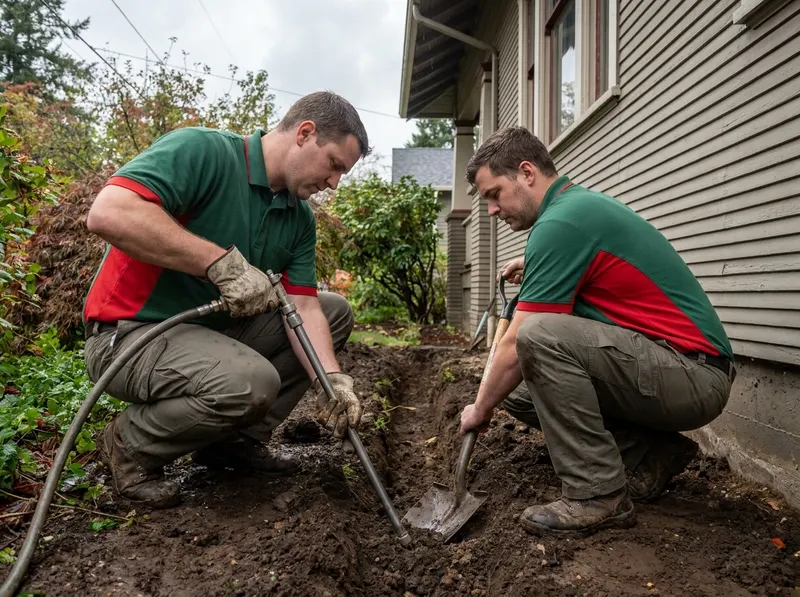
Subterranean termite soil barrier treatments establish a continuous chemical exclusion zone around the full foundation footprint of a home. In western Oregon, subterranean termites maintain soil-based colonies and construct mud shelter tubes over concrete foundation footings to feed on structural sill plates, floor joists, and stud bays. This intervention differs from localized wood injections, which only eliminate insects inside a single board; the liquid soil barrier bonds directly with the substrate along the subterranean perimeter, causing foraging workers to transfer the active agent through the underground colony matrix until the reproductive hierarchy is neutralized.
Older architectural styles common to Laurelhurst, Eastmoreland, and the Alphabet District (Northwest Portland) feature unreinforced masonry foundations or low-clearance crawlspaces that sit directly on moist soil profiles. Homes near the heavy tree canopies of Forest Park, Washington Park, and Mount Tabor Park face persistent soil saturation that accelerates mud-tube construction along stem walls. For concrete perimeter foundations, technicians excavate a trench measuring 6 inches wide by 6 inches deep, applying termiticide at a calibrated rate of 4 gallons per 10 linear feet. Where flatwork abuts living walls, such as concrete patios in Hawthorne, porch slabs in Sellwood-Moreland, or paved driveways in St. Johns, holes are drilled every 12 inches to rod the material directly to the sub-slab earth before capping each entry with non-shrinking hydraulic cement.
Property owners choose liquid barrier applications when an active colony threatens load-bearing framing, whereas bait stations fit properties where continuous trenching is hindered by finished hardscaping. The trade-off centers on physical site disturbance: a non-repellent liquid barrier delivers immediate structural isolation beneath the house but requires minor ground displacement and concrete coring, while baiting avoids ground disturbance but requires up to several months of worker feeding cycles to achieve colony collapse. Properties in Richmond, Montavilla, and the Alberta Arts District with daylight basements or slab-on-grade additions often utilize a hybrid protocol to safeguard structural wood without subjecting ornamental landscape plantings or vegetable gardens to chemical overspray.
Every job gets a firm, written price after a free on-site visit.
Tell us about your subterranean termite soil barrier treatments job in Portland and we'll send a clear, written quote, usually the same day.
 Marvexa Pest Relief