When unexpected intrusions disrupt a household, reliable pest control services Portland homeowners trust focus on structural diagnosis, mechanical sealing, and targeted bio-rational applications. Technicians identify species-specific entry points along subfloors, rooflines, and foundations across Multnomah County rather than relying on indiscriminate chemical spraying.

A pest control services company in Portland is a specialized structural management provider that inspects properties, installs mechanical exclusions, and applies targeted integrated treatments to eradicate active infestations without blanket chemical exposure.
Every service reflects the same meticulous attention to detail, whether it's a single job or a larger pest control services project across Portland.
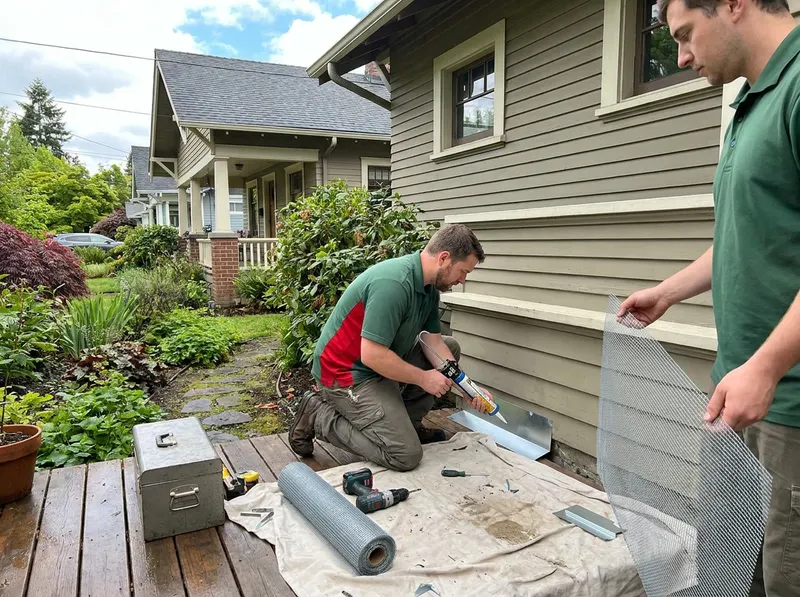
Complete sealing of foundation gaps, attic vents, and plumbing penetrations using 1/4-inch galvanized steel mesh, concrete patching, and heavy-gauge copper mesh to stop Norway rats and roof rats from penetrating building envelopes. Technicians perform exhaustive exterior structural audits, inspecting sill plates, roof dormers, crawlspace hatch covers, and chimney flashing junctions where architectural settling creates entry paths as narrow as 1/2 inch. Inside the building envelope, mechanical trapping arrays are deployed within secured runways inside attics and subfloors to clear trapped individuals without relying on interior toxic baits that cause foul odor emissions behind drywalls. Once exclusion barriers are secured, ongoing monitoring confirms zero re-entry along Multnomah County foundations.
Get a quote →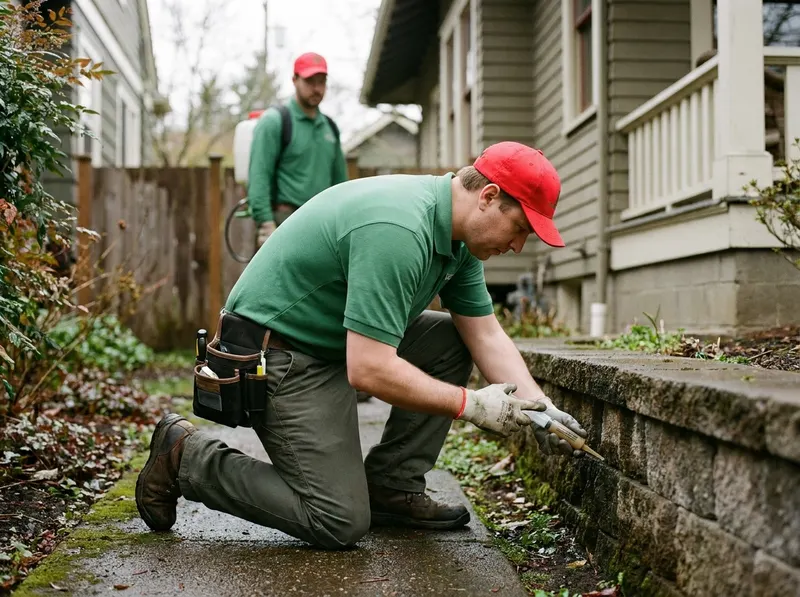
Precision deployment of non-repellent transfer baits and perimeter barrier micro-treatments formulated specifically to eradicate odorous house ant super-colonies and moisture-associated pavement ants without interior broadcast sprays. Odorous house ants (Tapinoma sessile) establish complex multi-queen satellite colonies throughout Pacific Northwest wall voids, insulation layers, and concrete slab fissures, rendering standard repellent pyrethroids counterproductive due to colony budding. Technicians apply slow-acting fipronil or dinotefuran liquid baits along active foraging trails, allowing worker ants to ingest and mechanically carry the active biological ingredients back to reproductive queens. Exterior foundations receive a precise two-foot micro-band application of water-insoluble compound to intercept subterranean trails before workers access interior baseboards.
Get a quote →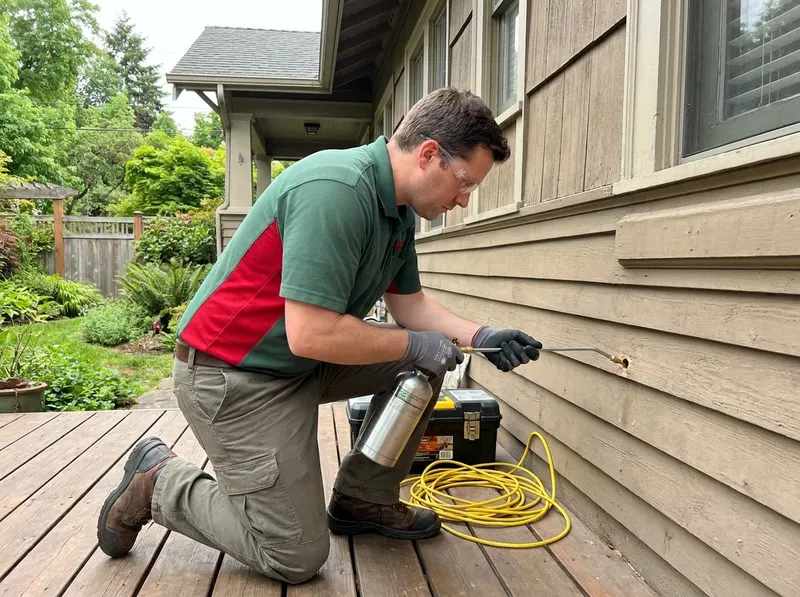
Detailed structural acoustic inspections followed by targeted dry-void injections and localized borate treatments that arrest carpenter ant nesting inside wet structural framing, wall voids, and subfloor joists. Western carpenter ants (Camponotus modoc) do not consume structural cellulose but hollow out smooth galleries inside softwood framing compromised by roof leaks or crawlspace dampness. Technicians locate interior nesting sites using acoustic resonance testing and moisture metering, drilling precision 1/8-inch access ports directly into infested studs to inject localized non-volatile insecticidal dusts. Exterior perimeter barriers intercept foraging satellite columns traversing overhanging tree limbs, retaining walls, and architectural siding seams.
Get a quote →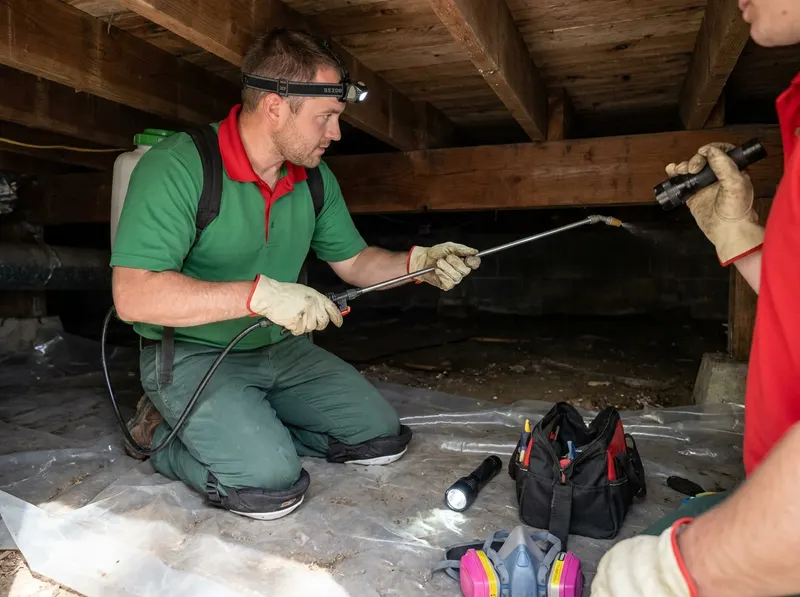
Comprehensive containment of contaminated subfloors, including removal of rodent urine-soaked insulation, sanitation of structural timbers, vapor barrier repairs, and installation of durable foundation vent covers. Prolonged rodent habitation deposits biohazard-grade biological waste, pheromone tracks, and ectoparasites inside fiberglass insulation batting, degrading indoor air quality via upward stack effect currents. Crews mechanically extract contaminated debris under negative air pressure containment, apply hospital-grade broad-spectrum enzyme biocide to neutralize pheromone scent markers, and re-line bare subfloor soils with heavy 10-mil polyethylene vapor sheeting. Foundation air vents receive custom-fitted 23-gauge galvanized wire screen assemblies to ensure ventilation without rodent intrusion.
Get a quote →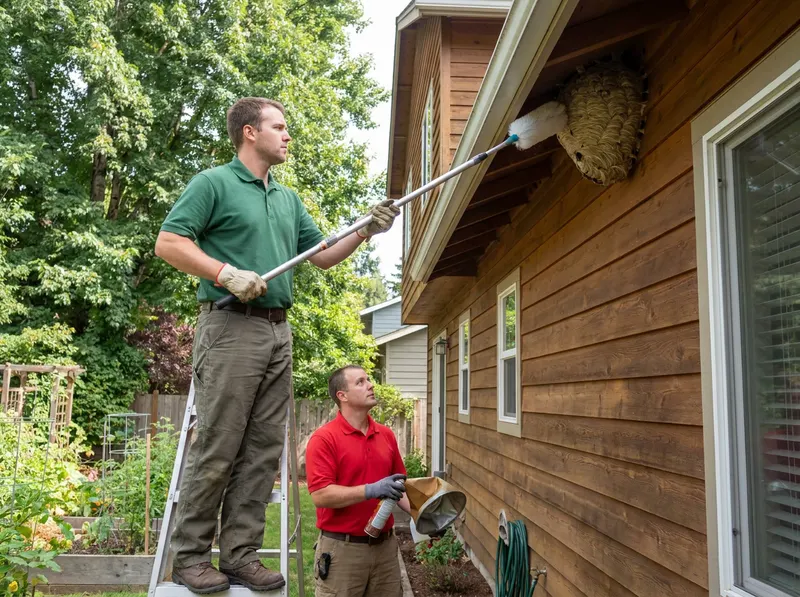
Rapid-response elimination of aerial yellowjacket, paper wasp, and hornet nests from roof eaves, structural siding, and wall voids utilizing specialized protective gear and direct nest extraction equipment. Western yellowjackets (Vespula pensylvanica) and bald-faced hornets construct expansive paper pulp nests beneath soffits, inside exterior chimney housings, and within wall cavities, presenting significant sting hazards to building occupants. Technicians apply localized non-flammable freezing aerosols or focused botanical pyrethrin direct sprays to neutralize aggressive guard workers instantaneously. The complete physical nest structure is detached, bagged, and removed from the property, followed by residual dusting of the exterior void entrance to prevent returning foragers from reconstructing the colony.
Get a quote →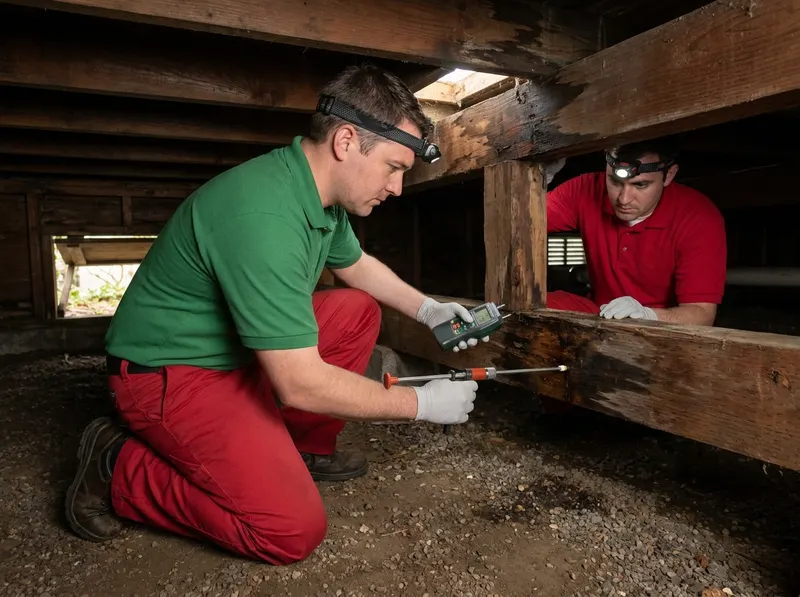
Specialized assessment of fungal wood decay and subterranean dampwood termite activity, integrating targeted localized termiticides with practical drainage and ventilation recommendations. Pacific dampwood termites (Zootermopsis angusticollis) target exclusively high-moisture lumber, typically colonizing subfloor sill plates adjacent to clogged gutters, leaky crawlspace hose bibs, or earth-to-wood deck footings. Technicians map moisture concentrations across building sills using electronic non-destructive pin meters, administering targeted disodium octaborate tetrahydrate (DOT) solutions into affected timbers to create a lasting mineral barrier against fungal rot and cellulose consumption. Operators provide detailed architectural remediation outlines to eliminate chronic wood moisture.
Get a quote →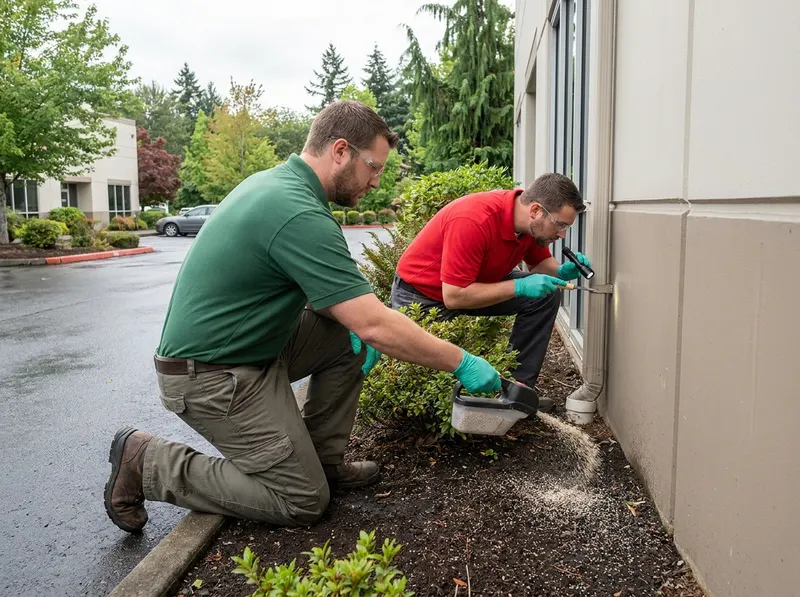
Non-disruptive inspection, digital logging, and perimeter exclusion routines engineered for multi-family complexes, retail buildings, and food-service facilities under strict Integrated Pest Management standards. Commercial facilities require discreet, documentable interventions that adhere to municipal environmental ordinances while safeguarding stored food goods, patron dining spaces, and shared common corridors. Service protocols include digital barcode tracking of exterior tamper-resistant bait stations, indoor insect monitoring traps for pest threshold indexing, and non-chemical structural exclusion around delivery docks, trash enclosures, and overhead utility lines. Interventions are coordinated during off-peak hours to minimize business disruption.
Get a quote →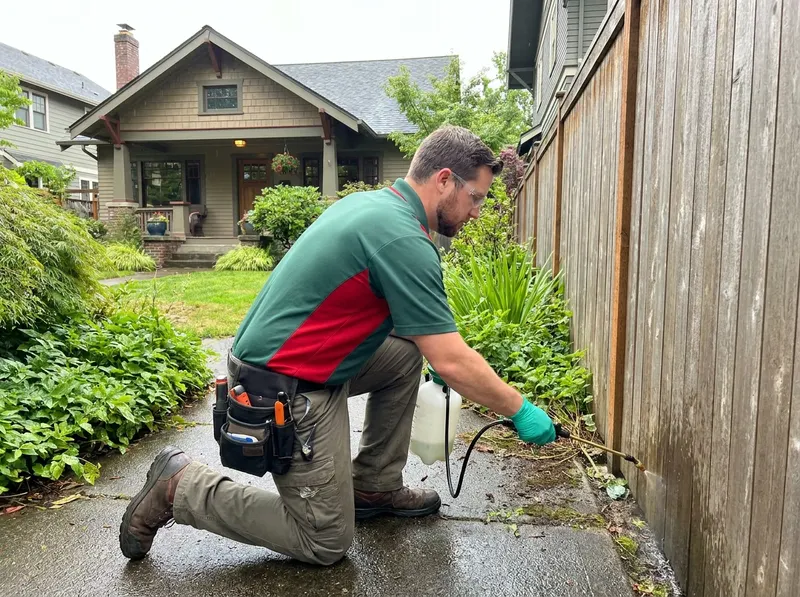
Targeted exterior foundation applications and vegetation clearance evaluations designed to deflect spring ant swarms, summer spiders, and autumn rodent migrations before entry points develop. Pacific Northwest seasonal shifts generate distinct pest movement cycles: saturated spring soils drive subterranean ants upward, warm dry summers elevate spider and beetle activity along siding, and dropping autumn temperatures trigger indoor rodent dispersal. Technicians apply micro-encapsulated foundation barriers extending two feet upward along exterior foundation walls and three feet outward across surrounding gravel or soil zones. Clear physical guidance is provided regarding perimeter shrub pruning and mulch displacement to reduce continuous pest bridging.
Get a quote →You get a firm, itemized quote for your pest control services before any work begins, no surprises, no pressure.
Careful prep, tidy work, and a full cleanup when we are done. We treat your home and belongings like our own.
The same trusted, background-checked team from the first call to the final check.
Selecting structural treatment protocols depends entirely on the biological classification of the invading organism, structural access requirements, and the property's microclimate. If subterranean rodents or roof rats are heard moving through walls, prioritize whole-structure mechanical exclusion coupled with exterior tamper-resistant bait stations; the operational trade-off requires opening crawlspace access points and replacing gnawed foundation vent screens rather than simply placing loose indoor poison packs. If odorous house ants are foraging across kitchen surfaces, select low-toxicity interior gel baits paired with targeted exterior perimeter micro-band applications; the trade-off is allowing 7 to 10 days for worker ants to transfer the active toxicant through the colony rather than expecting an instant, temporary knockdown from repellent surface sprays that scatter the nest.
If moisture-loving pests such as carpenter ants or dampwood termites invade structural timbers, choose localized sub-surface borate injections combined with targeted plumbing or subfloor leak repairs; this trade-off requires localized wood boring and moisture remediation rather than relying on rapid topical dust applications that fail to reach deep galleries. For stinging insect nests located on eaves or within wall cavities, opt for direct targeted aerosol capture and mechanical vacuum extraction; this resolves the immediate sting hazard within 60 minutes but requires physical ladder access and exterior opening repairs. For multi-family properties experiencing bed bug or stored-product pest infestations, choose localized thermal heat remediation or desiccant dust applications within baseboard voids; the operational trade-off requires extensive resident preparation, laundering of fabrics at 120 degrees Fahrenheit, and moving interior furniture away from perimeter walls rather than relying on quick residual surface sprays that risk pushing bed bugs into adjacent units.
For crawlspace moisture infestations involving subterranean termites, silverfish, or fungus gnats, select subfloor encapsulation coupled with commercial dehumidification and localized perimeter liquid soil trenches; the trade-off involves higher upfront capital expenditure and clearing stored items from beneath floor joists, yet it fundamentally eliminates the sub-65-percent wood moisture levels required for biological pest survival. Standardizing pest management requires analyzing whether active physical exclusion, moisture removal, or localized biological chemistry yields long-term residential containment.
Every project gets a firm, written price after a free on-site visit. Ranges below for orientation.
Tell us about your pest control services job and we'll send a clear, written quote, usually the same day. Or just call and talk to a real Portland pro.
(503) 360-0458
Portland experiences persistent annual precipitation exceeding 36 inches across approximately 155 rainy days each year, driving elevated soil saturation that forces Norway rats and odorous house ants out of subterranean nests into crawlspaces and wall voids throughout Multnomah County. Historic bungalows in Hawthorne, Craftsman homes in Richmond, and turn-of-the-century Victorian residences in the Alphabet District frequently feature unsealed dry-stack stone foundations, unbolted mudsills, timber-to-soil contacts, and aging lath-and-plaster construction that require physical structural exclusions rather than routine chemical coatings. Proximity to dense urban tree canopies near Forest Park and Mount Tabor Park creates direct eave access for roof rats traversing utility cables and overhanging Douglas fir branches, necessitating heavy-gauge 1/4-inch mechanical mesh installation around dormers, chimney flashings, and subfloor foundation vents. Across eastside neighborhoods such as the Alberta Arts District, Montavilla, and St. Johns, expansive residential gardens, unharvested fruit trees, and backyard composting bins provide sustained caloric nutrition that fuels rapid seasonal rodent population surges from late August through December. Furthermore, historic multi-family apartment communities in Goose Hollow and high-density commercial strips along Hawthorne Boulevard face persistent cockroach and stored-product pest vectors along shared plumbing shafts and continuous baseline brick party walls. Addressing these regional structural vectors requires rigorous physical sealing of exterior architectural openings, specialized subfloor moisture mitigation, and biologically targeted treatments engineered specifically for the damp maritime climate of the Pacific Northwest.
Free estimates for Portland & the surrounding area.
 Marvexa Pest Relief